
Capital Gains Tax on a Ponte Vedra Beach Home Sale: What You Keep at Closing

What Happens to the Profit When You Sell?
You are sitting at the kitchen table in Ponte Vedra Beach with a closing estimate on one side and a cup of coffee going cold on the other. You bought this house a long time ago. You redid the kitchen, replaced the roof and added the pool cage. The number at the bottom of the page is bigger than you ever pictured, and one quiet question follows it around the room: how much of this do I actually keep?
It is a fair question, and it deserves a real answer before you sign a listing agreement. For most owners the news is good. For some long-time owners in higher price ranges, a little planning can be worth tens of thousands of dollars.
If you owned and lived in your Ponte Vedra Beach home for at least two of the last five years, the IRS generally lets you exclude up to $250,000 of gain, or $500,000 on a joint return. You owe federal capital gains tax only on gain above that amount, and Florida has no state personal income tax. Your gain is not simply sale price minus purchase price, so your records matter.
The Two-Out-of-Five-Year Rule
The exclusion comes from what tax people call Section 121, and the IRS explains it in Topic 701 and Publication 523. To qualify, you must pass two tests during the five years ending on your sale date:
- Ownership: you owned the home for at least 24 months.
- Use: you lived in it as your main home for at least 24 months.
The two periods do not have to line up. On a joint return, either spouse can meet the ownership test, but both must meet the use test to claim the full $500,000. You generally cannot use the exclusion if you already used it on another home sold in the prior two years.
Those limits are not new, and they have not been raised for home price growth. That is why this topic comes up more often now at higher price points than it did a decade ago.
How Your Gain Is Actually Figured
Your taxable picture starts with three numbers, and only one of them is the sale price.
- Amount realized: the sale price minus selling expenses such as commissions, advertising and legal fees.
- Adjusted basis: what you paid, plus certain purchase settlement costs like title, recording and survey charges, plus improvements.
- Gain: amount realized minus adjusted basis.
Improvements are the piece owners most often leave on the table. Publication 523 counts work that adds value, extends the home's life or adapts it to new uses. Routine repairs generally do not count unless they are part of a larger remodel. If you are not sure where that new roof or kitchen falls, ask your tax professional and dig up the invoices now, not in April.
A Simple Example, With Made-Up Numbers
These figures are hypothetical. They are not a price estimate for any home or neighborhood. They just show how the math moves.
Say you and your spouse bought for $650,000, put $160,000 of documented improvements into the house, and sell for $1,500,000 with $90,000 in selling expenses.
- Amount realized: $1,410,000
- Adjusted basis: $810,000
- Gain: $600,000
- After the $500,000 joint exclusion: $100,000 taxable
At a 15 percent long-term rate, that is about $15,000 in federal tax. Now run it again without the improvement records. The gain rises to $760,000, the taxable amount to $260,000 and the tax to about $39,000. That folder of receipts just did $24,000 of work.
Actual rates depend on your income. Federal long-term capital gains are taxed at 0, 15 or 20 percent, and the 3.8 percent net investment income tax can apply to the taxable part of the gain when your modified adjusted gross income is above $250,000 on a joint return or $200,000 for a single filer. The part of the gain you exclude is not subject to that tax.
What Would You Walk Away With?
Joey Larsen can give you a realistic value for your Ponte Vedra Beach home and a net sheet you can take straight to your CPA.
Call or text Joey Larsen: 904-863-6679
or visit RetireMeToFlorida.com
Situations That Change the Answer
You lost your spouse. A surviving spouse who has not remarried can generally still claim up to $500,000 if the home sells within two years of the death and the other tests are met. Basis can also change at a death. For a jointly owned home in a state like Florida, half of the basis generally resets to value at the date of death. A sale after a loss is not a decision to rush, but this is a date to know about.
You rented it out. If you took depreciation after May 6, 1997, you cannot exclude the part of the gain equal to that depreciation. Periods after 2008 when the home was not your main home can also reduce the exclusion, with some exceptions.
It is your second home. A beach condo you only visit does not meet the use test unless you truly lived there as your main home for two years. A 1031 exchange is for investment property, not a personal residence, so talk to a tax professional before assuming it fits.
You moved early. If you fall short of two years because of a job move of at least 50 miles, a health reason or certain unforeseen events, a partial exclusion may be available.
You served. Members of the uniformed services, the Foreign Service, the intelligence community and the Peace Corps on qualified extended duty can suspend the five-year test period for up to 10 years. If you left for orders and kept the house, read this rule closely.
You sold at a loss. A loss on your main home is not deductible.
How This Shapes Your Timing Decision
Taxes should not drive the whole decision, but they do belong in the conversation. A few things worth raising with your CPA before you list:
- Which tax year the closing lands in. A closing in late December and one in early January fall in different tax years. If your income will be lower next year, that gap may matter.
- Whether you are close to the two-year mark. If you are a few months short, waiting could change your result dramatically.
- What you are buying next. If you are moving within Florida, your Save Our Homes benefit may be portable, and that is a separate calculation from capital gains. Our guide to homestead portability for Florida movers walks through it.
If you are going from Nocatee to the coast, or the other way around, this piece of the math belongs alongside the rest of the Nocatee to Ponte Vedra Beach move.
Frequently Asked Questions
Do I have to pay capital gains tax when I sell my house in Florida?
Often not, or not on all of it. If you meet the ownership and use tests, you can generally exclude up to $250,000 of gain, or $500,000 on a joint return. Gain above that amount is subject to federal tax. Florida has no state personal income tax.
Can I count my remodel to lower my gain?
Improvements that add value, extend the life of the home or adapt it to new uses generally increase your basis, which lowers your gain. Routine repairs usually do not count unless they are part of a larger project. Keep your invoices and ask your tax professional what qualifies.
Do I have to report the sale if all my gain is excluded?
You must report the sale if you received Form 1099-S, even when the gain is excludable, and whenever you cannot exclude all of the gain. The IRS uses Schedule D and Form 8949 for this.
Does the $500,000 exclusion go up with inflation?
The IRS still lists the limits at $250,000 and $500,000 as of its October 2026 page update. Check with your tax professional for any change before you close.
Search Northeast Florida Homes
Thinking about your next move? Browse homes in Ponte Vedra Beach, Nocatee and across St. Johns County.
What To Do Right Now
- Find your original closing statement and start a folder of improvement invoices, even if some are old.
- Write down the dates you owned and lived in the home, including any time it was rented.
- Get a current value and a net sheet, so you are working from a real number instead of a guess.
- Take those numbers to your CPA or tax attorney. This post is general information, not tax advice.
- Call or text Joey Larsen at 904-863-6679 to walk through value and timing for your Ponte Vedra Beach home.
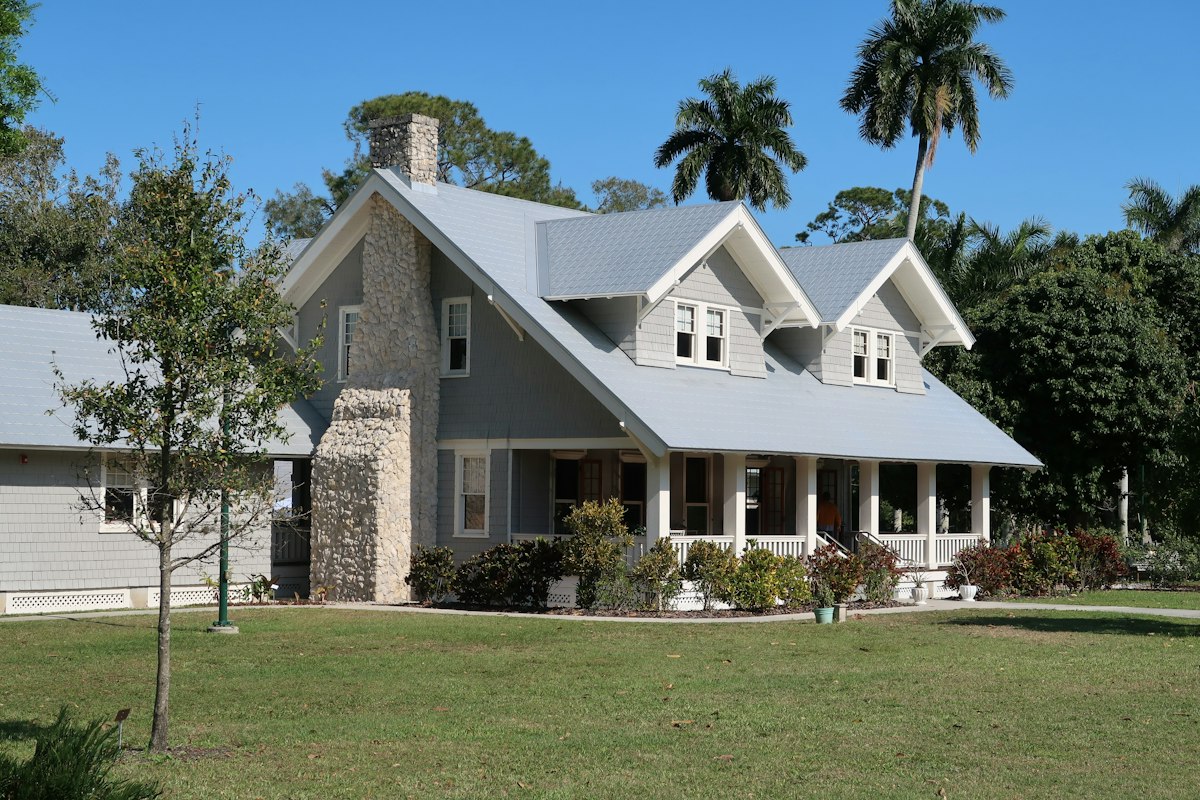
Cover photo: FL Ponte Vedra Beach house01c by Ebyabe, CC BY-SA 4.0, via Wikimedia Commons.
Categories
- All Blogs (1032)
- Buyer Questions (10)
- Buyer Resources (14)
- Communities (8)
- Cost of Living (6)
- Insurance & Risk (1)
- Jacksonville / St. Johns County (3)
- Joey Studies The Market (1)
- Local Area Happenings (1)
- Local Favorites (236)
- Market Intelligence (236)
- Market Update (3)
- Nocatee (2)
- Northeast Florida Market (1)
- Our Communities (4)
- Questions Buyer Are Asking (23)
- Questions Sellers Are Asking (35)
- Real Estate Done Right (10)
- Relocation (1)
- Relocation Guides (225)
- Retirement Planning (4)
- Seller Resources (3)
- The Florida Life (225)
Recent Posts