Before It Was Ponte Vedra Beach: Mineral City, a Nine-Hole Course and One Strange Night in 1942

Have You Ever Wondered What Was Here Before the Houses?
Walk north from Mickler's Landing on a cool Sunday morning and the beach does most of the talking. Hard-packed sand at low tide, a few walkers with coffee, pelicans sliding along the face of a wave. Behind the dune line sit some of the most expensive homes in Northeast Florida. It is easy to assume this stretch has always looked like money. It has not. A little over a century ago, the same sand was being dug up and shipped off by the ton, and the place had a working name: Mineral City.
Ponte Vedra Beach began as Mineral City, a mining settlement founded after valuable minerals were found in the beach sand in 1914. After the mining stopped, the National Lead Company turned its land into a golf resort, the Ponte Vedra Club, which dates to 1928, and gave the town its Spanish name in 1929. A wartime saboteur landing in 1942 and the arrival of the PGA Tour and TPC Sawgrass in the 1970s and 1980s shaped the beach town you see today.
Mineral City: When the Sand Was the Business
The story starts with the sand itself. In 1914, minerals were discovered along this part of the coast, and a small community called Mineral City grew up around the digging. The Buckman and Pritchard Mining Company pulled ilmenite, a titanium ore, along with zircon and rutile out of the beach sands. During World War I those minerals had real value.
The National Lead Company bought the operation in 1921. By then the war was over, demand had fallen, and mining here stopped. The company was left holding miles of oceanfront land that nobody had thought of as a place to live. That accident of timing is the reason Ponte Vedra Beach exists.
A Nine-Hole Course for the Employees
Before the resort, there was a company course. In the early 1920s National Lead built a nine-hole layout for its employees, designed by Herbert Bertram Strong, one of the founders of the PGA of America, along with a 12-room log clubhouse. When the company's mining days ended, that modest course and clubhouse became the seed of the Ponte Vedra Club.
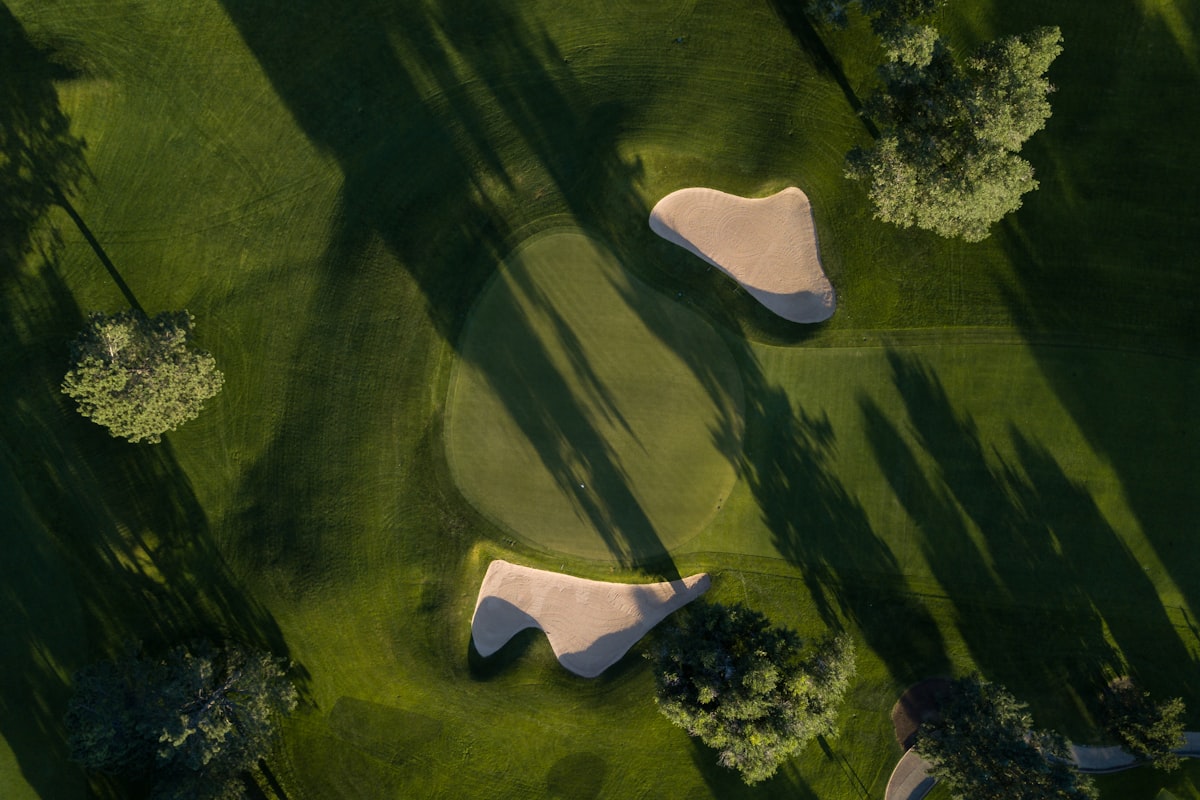
The resort itself debuted in 1928, and Strong's Ocean Course dates to that same year. Its ninth hole, a short par three to a green surrounded by water, is often described as the first island green ever built, decades before the famous 17th at TPC Sawgrass a few miles south. Robert Trent Jones Sr. reworked the course in 1947 and Bobby Weed did it again in 1998. The Lagoon Course came later, with a front nine by Jones that opened in 1961.
The club's 1937 clubhouse still stands behind the lobby building of today's Ponte Vedra Inn & Club. The 1939 Ryder Cup was scheduled for the Ocean Course and canceled when war broke out in Europe. Golf, in other words, was here before almost anything else.
How a Mining Camp Got a Spanish Name
In 1929 National Lead decided to develop its land along the lines of The Cloister at Sea Island, Georgia. Colonel Joseph C. Stehlin arrived on January 1, 1929 to manage the project. Mineral City was not a name you could sell to winter visitors from Jacksonville's Riverside and Avondale, so Stehlin and his wife Elizabeth went looking for a better one.
They found Pontevedra on an old map, a Spanish town on the Atlantic coast. Stehlin submitted the name to the company's board and Mineral City became Ponte Vedra.
Ownership changed hands as the resort grew. Stockton, Whatley, Davin & Co., a Jacksonville developer, took control of the Ponte Vedra Corporation in July 1934. In the early 1980s Gate Petroleum bought the Florida holdings of that company for $60 million, a purchase that included the Inn & Club and more than 16,000 acres. Gate still operates the resort today.
Curious What Your Piece of Ponte Vedra Beach Is Worth?
Joey has lived in Ponte Vedra Beach and Nocatee for 30 years and knows the streets east and west of A1A house by house. A short conversation about your home and your timing is free.
Call or text Joey Larsen: 904-863-6679
or visit RetireMeToFlorida.com
One Strange Night in June 1942
The quietest beach in the area was once the scene of one of the stranger episodes of World War II. On the night of June 16, 1942, the German submarine U-584 surfaced off Ponte Vedra and put four men ashore in rubber rafts. They were part of Operation Pastorius, a Nazi plan to sabotage American war industry. The team here was led by Edward John Kerling. A second team had landed on Long Island, New York a few nights earlier.
The four men came up the beach in bathing suits and German Navy caps, buried their explosives and gear in the sand, changed into civilian clothes and walked north to Jacksonville Beach. From there they took a city bus into Jacksonville and boarded trains toward Cincinnati and Chicago. Their targets included hydroelectric plants at Niagara Falls, aluminum plants and locks on the Ohio River.
The plot fell apart because the leader of the New York team, George Dasch, decided to turn himself in. He phoned the FBI on June 15, was not believed, then went to FBI headquarters in Washington a few days later carrying $84,000 in cash. All eight men were in custody within two weeks. A military tribunal tried them from July 8 to August 1, 1942, found all eight guilty on August 3, and six were executed on August 8. Dasch and one other man had their sentences reduced for cooperating. The whole affair, from landing to execution, took less than two months.
The Dollar Deal That Brought the PGA Tour
For most of the 20th century Ponte Vedra stayed small: the Inn & Club, a scattering of oceanfront cottages and a lot of palmetto scrub. That changed in 1972, when developers broke ground on Sawgrass, an 1,100-acre community between A1A and the Intracoastal.
In the mid-1970s PGA Tour commissioner Deane Beman was looking for a permanent home for the Tournament Players Championship. As the story is usually told, developer Paul Fletcher offered him a 400-acre tract for one dollar. That land became the Stadium Course and the PGA Tour headquarters. The Players Championship has been played on the Stadium Course since 1982, and every March the town fills with the sound of it.
From there the modern map filled in: Marsh Landing on the Intracoastal side, The Plantation and its private beach club, the condominiums and cottages of Old Ponte Vedra along the boulevard, and eventually Nocatee to the west. If you want to picture how the oceanfront pieces fit together today, our post on life in Old Ponte Vedra and the one on living in Sawgrass pick up where the history leaves off.
Where You Can Still See the Old Ponte Vedra
You do not need a museum to feel this history. A few places carry it in plain sight:
- The Ponte Vedra Inn & Club on Ponte Vedra Boulevard. The 1937 clubhouse is still part of the complex, and the Ocean Course's island ninth is the oldest piece of golf in town.
- The beach itself between Mickler's Landing and the Guana. This is the stretch where the mineral sands were worked and where the saboteurs came ashore. At low tide the dark streaks of heavy mineral sand are easy to spot.
- The Guana Tolomato Matanzas Reserve south of town. The marsh and scrub here look much the way the whole coast did before 1914, which is the best way to understand what National Lead was looking at when it decided to build a resort.
- The Milam House at 1033 Ponte Vedra Boulevard. Paul Rudolph's 1961 oceanfront design, listed on the National Register of Historic Places in 2016, is the town's most famous piece of modern architecture. It is a private home, so admire it from the beach.
- TPC Sawgrass. The clubhouse and the Stadium Course are open to the public most of the year, and standing behind the 17th green explains more about modern Ponte Vedra than any brochure.
Frequently Asked Questions
Why was Ponte Vedra Beach originally called Mineral City?
Minerals were discovered in the beach sand in 1914, and a mining settlement grew up to extract ilmenite, zircon and rutile. The community took the name Mineral City. The National Lead Company bought the mining operation in 1921 and stopped mining as demand fell after World War I.
Where did the name Ponte Vedra come from?
Colonel Joseph C. Stehlin, who arrived on January 1, 1929 to manage the resort development, and his wife Elizabeth found the Spanish town of Pontevedra on an old map. The National Lead board accepted the name and Mineral City became Ponte Vedra.
Did German saboteurs really land at Ponte Vedra Beach?
Yes. On the night of June 16, 1942, four men from the submarine U-584 came ashore near Ponte Vedra as part of Operation Pastorius. They were captured within two weeks after a member of the companion team in New York turned himself in, and six of the eight saboteurs were executed on August 8, 1942.
When did the PGA Tour come to Ponte Vedra Beach?
In the mid-1970s the PGA Tour chose Ponte Vedra Beach for its headquarters and for the Stadium Course at TPC Sawgrass, built on land a developer offered for a dollar. The Players Championship has been played there since 1982.
Search Ponte Vedra Beach Homes
Browse current listings in Ponte Vedra Beach, Sawgrass, Marsh Landing, The Plantation and Old Ponte Vedra, plus Nocatee and the rest of St. Johns County.
What To Do Right Now
History is a good excuse for a Sunday drive, and the places above are all within a few miles of each other.
- Park at Mickler's Landing on a low tide and walk north. Look for the dark mineral streaks in the sand along the way.
- Drive Ponte Vedra Boulevard past the Inn & Club and the oceanfront cottages of Old Ponte Vedra to see the town's oldest layer.
- Stop at TPC Sawgrass and stand behind the 17th green. It is open to visitors most days outside tournament week.
- If you are thinking about buying or selling here, call or text Joey at 904-863-6679. He has lived in Ponte Vedra Beach and Nocatee for 30 years and can tell you which streets fit the life you want.
Call or text Joey Larsen at 904-863-6679, or visit RetireMeToFlorida.com to get started.
Cover photo: Arthur Milam House, Ponte Vedra, FL, US (02) by Bubba73, CC BY-SA 3.0, via Wikimedia Commons.
Categories
- All Blogs (1032)
- Buyer Questions (10)
- Buyer Resources (14)
- Communities (8)
- Cost of Living (6)
- Insurance & Risk (1)
- Jacksonville / St. Johns County (3)
- Joey Studies The Market (1)
- Local Area Happenings (1)
- Local Favorites (236)
- Market Intelligence (236)
- Market Update (3)
- Nocatee (2)
- Northeast Florida Market (1)
- Our Communities (4)
- Questions Buyer Are Asking (23)
- Questions Sellers Are Asking (35)
- Real Estate Done Right (10)
- Relocation (1)
- Relocation Guides (225)
- Retirement Planning (4)
- Seller Resources (3)
- The Florida Life (225)
Recent Posts